Georg Mühleck Artist

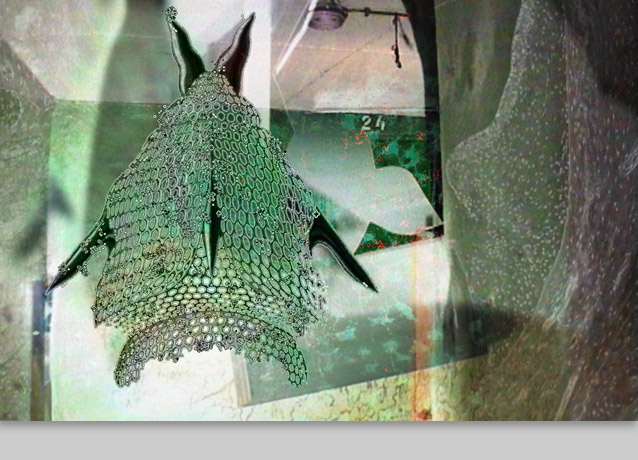
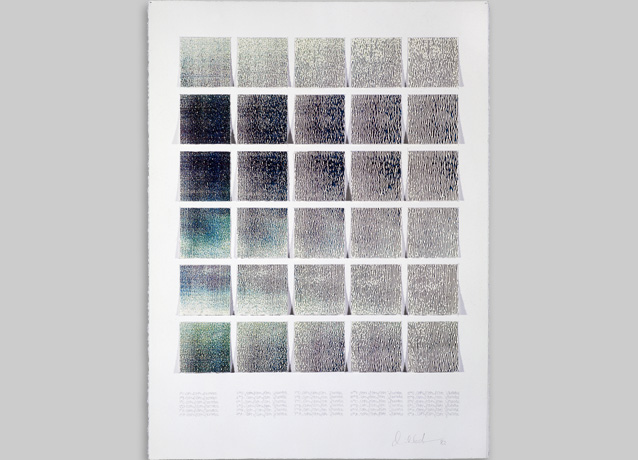
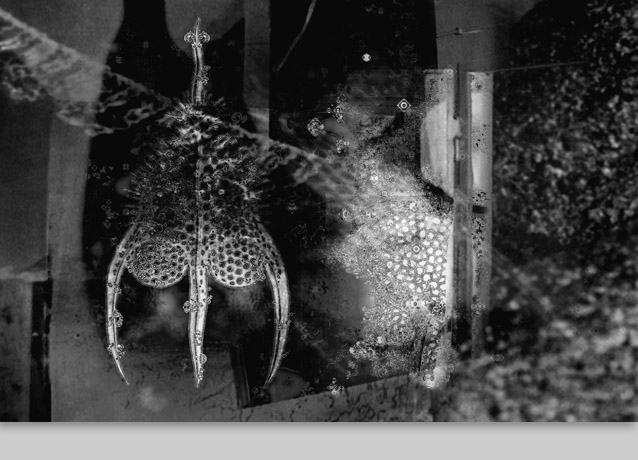
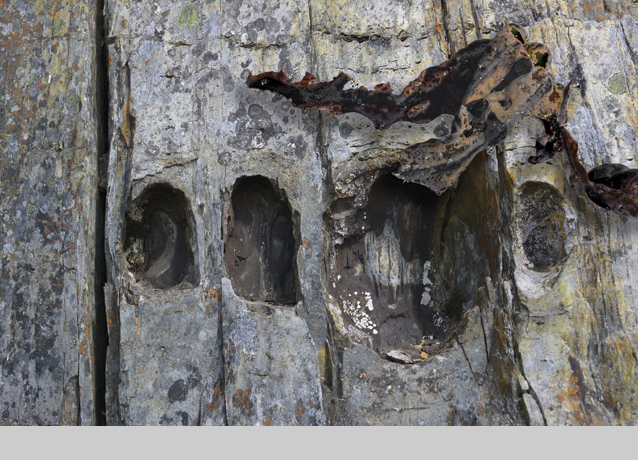
“mind bunker #8” 1999, Lysonic on Rough Fine Art paper

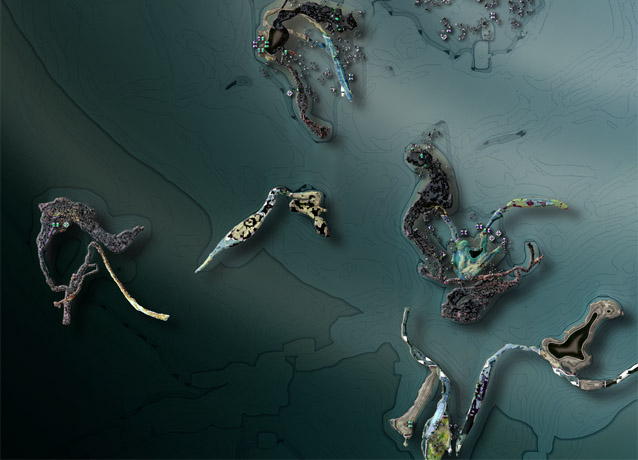
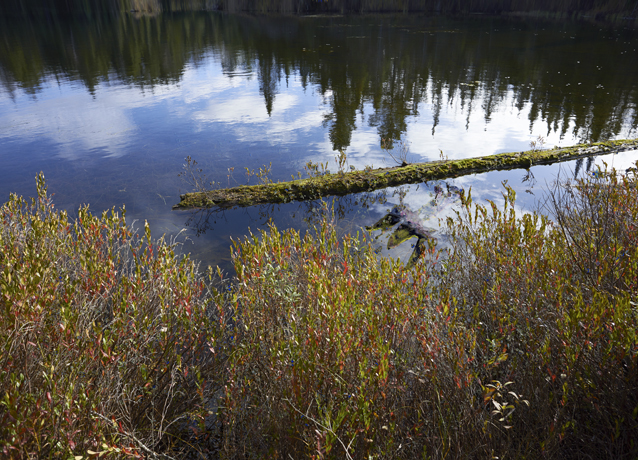
“sTEAmulus pond 2 — Subculture 2” 2008, archival pigment on Arches

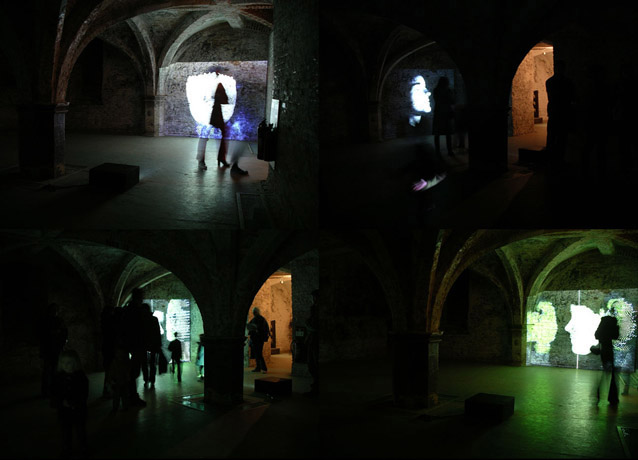
“(Remote) Mind — The strangers are still me” Video installation by Barbara Rauch and Georg Mühleck, music by Karin Krog; 2006 Undercroft, Stephen Lawrence Gallery, London UK

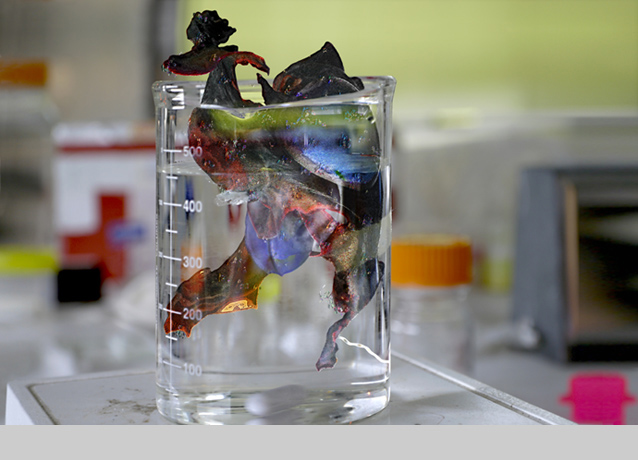
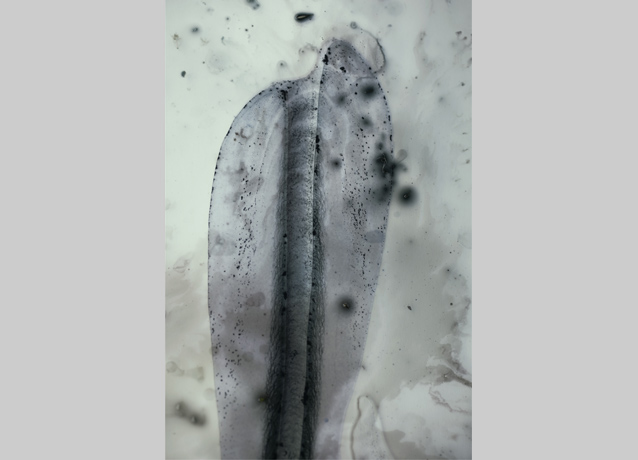
kelpie_11b_in_situ_lab_2007
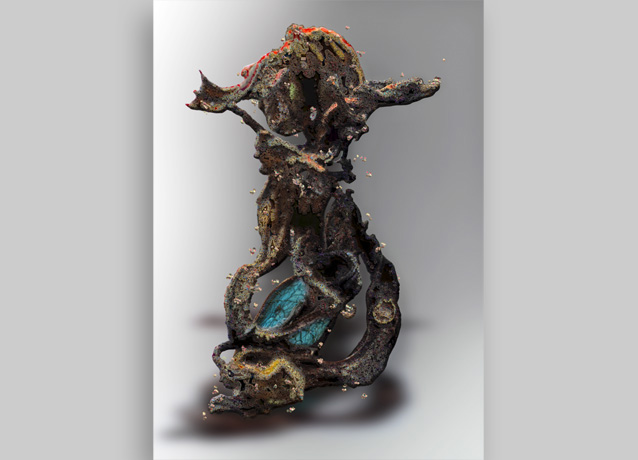
The name kelpie dates back to the 17th century in Scottish folklore, serving as a water spirit. I borrowed the name for my art forms (mind creatures): a symbiosis of plant, animal and human being, kelpies evolve as a manifestation of observation, thought and phantasy. While abstract in detail, they are organic as a whole. Kelpies look strange, but somehow, they are familiar. What are they doing here, what do they want, why do they exist? ------- © Georg Mühleck - VG Bild-Kunst; mail@georgmuehleck.com; www.georgmuehleck.com; info@bildkunst.de; www.bildkunst.de

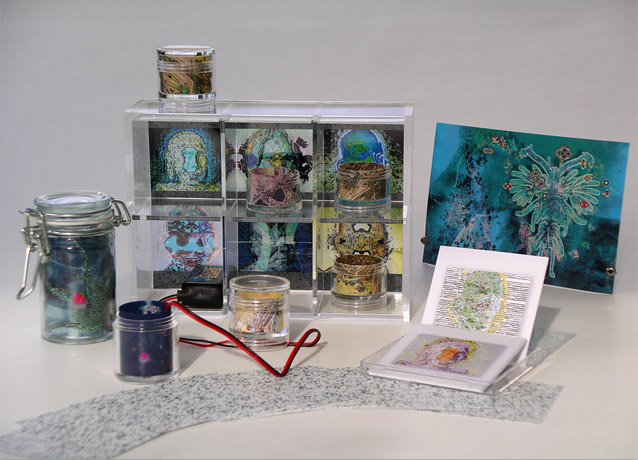
“Cellular Beauty Mini-Lab” 1993/2001

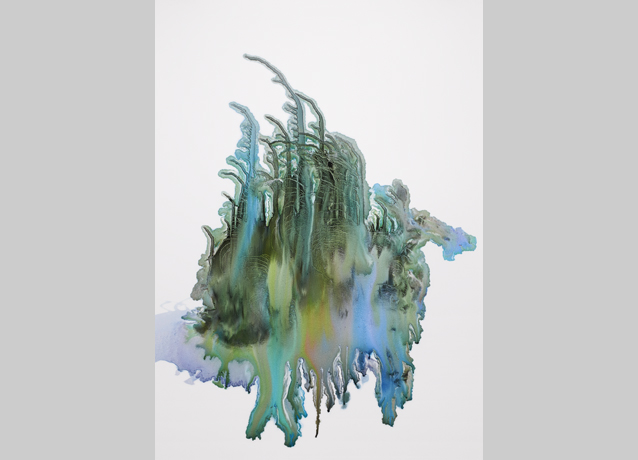
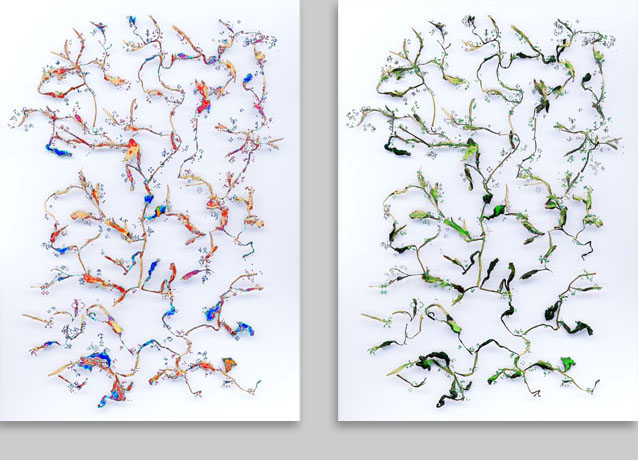
fluid 13(k) 2021/22, Archival pigment on Hahnemühle Photo Rag
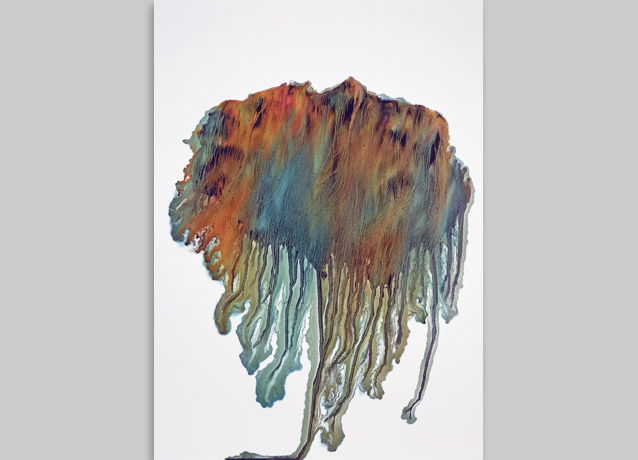
Note on the work process The starting point for the fluid series have been photographs or scans taken from nature, their organisms serving as an ‘action space’ for cell cultures of synthetically generated life. Photography and algorithms create an image using computer models of Cellular Automata (cf. my work series Cellular Cultures-T, caspecies, and kelpies). Following the completion of these data graphs, some of them are subject to a process involving real, flowing ink. The digital work erodes under the impact of gravity on the ink. The sequence of this process is captured in photographs up to a point when the colour flow has become almost stagnant. One of the number of photographs is selected and printed with pigment ink on hand-made laid paper. What looks like painting, is in fact photography. The ‘digital fauna’ has continued to evolve. New beings, organisms, perhaps worlds have emerged. (Georg Mühleck, Juli 2021) "fluid" - Neue Wesen im Farbfluss, oder: die Einwirkung der Schwerkraft auf Tusche. Notiz zum Arbeitsprozess Ausgangspunkt der Folge fluid sind Fotos oder Scans aus der Natur, deren Organismus als ‘Aktionsraum’ für Zellkulturen synthetisch generierten Lebens dient. Fotografie und Algorithmen finden zu einem Bild durch die Nutzung von Computermodellen Zellularer Automaten (siehe meine Arbeitsreihen Cellular Cultures-T, caspecies und kelpies). Nach Fertigstellung jener Datagrafien werden einige davon einem Prozess mit real fliessender Tusche ausgesetzt. Das digitale Werk erodiert unter der Einwirkung der Schwerkraft auf die Tusche. Die Abfolge dieses Prozesses wird fotografisch festgehalten, bis ein Punkt erreicht ist, an dem der Farbfluss nahe an einen Stillstand gekommen ist. Aus den entstandenen Fotos wird eines ausgewählt und mit Pigmenttusche auf Bütten ausgedruckt. Was aussieht wie Malerei, ist in Wirklichkeit Fotografie. Die ‘digitale Fauna’ hat sich weiterentwickelt. Neue Wesen, Organismen, vielleicht Welten sind entstanden. (Georg Mühleck, Juli 2021) ------- © Georg Mühleck - VG Bild-Kunst; mail@georgmuehleck.com; www.georgmuehleck.com; info@bildkunst.de; www.bildkunst.de

caspecies_9A_in_studio_2015, Archival pigment on Arches
The word “CASPECIES” consists of Cellular Automata and SPECIES. These species are organisms comprised of Cellular Automatas. They nourish of algorithms. In the process of creation, cell cultures go through hundreds to thousands of generations before they freeze into a large artificial micro-still. Rather than simulating real life, caspecies evoke the possibility of creatures of yet unknown origin and scale. Wanted or not, they might be the result of some genetic research, possibly escaped from petri dishes. Are these ‘mind species’ only — labyrinths of thought, or a Garden of Eden? How will we define nature in the future, with all the by-products of human interference? Is genetic manipulation part of evolution or is it its destruction? Fernando Pessoa writes in his ‘book of disquiet’: “I don’t know if we once were other beings, whose greater completeness we sense only incompletely today, being mere shadows of what they were, beings that have lost their solidity in our feeble two-dimensional imaginings of them amongst the shadows we inhabit.” (Georg Mühleck) Das Wort “CASPECIES” ist eine Wortfindung aus ‘Cellular Automata’ und SPECIES. Diese Spezies sind Organismen, die aus zellularen Automaten entstanden sind. Sie ernähren sich von Algorithmen. Während der Entstehung durchlaufen Zellkulturen hunderte oder tausende von Generationen, bevor sie zum künstlichen Mikro-Stilleben erstarren. Statt natürliches Leben zu simulieren, ruft ‘caspecies’ die Möglichkeit von Kreaturen bisher unbekannten Ursprungs und unbekannter Dimension hervor. Gewollt oder ungewollt mögen diese Kreaturen das Resultat genetischer Forschung sein, vielleicht aus der Petrischale entwichen. Sind dies nur ‘Gehirn-Spezies’ — Gedankenlabyrinthe, oder ein Garten Eden? Wie werden wir Natur, mit all den Nebeneffekten menschlicher Einmischung, in der Zukunft definieren? Ist genetische Manipulation ein Teil von Evolution, oder ist sie dessen Destruktion? Fernando Pessoa schreibt in seinem ‘Buch der Unruhe’: “Ich weiß nicht, ob es andere Wesen gegeben hat, die wir einmal waren, deren größere Vollständigkeit wir heute fühlen, da wir nur noch ihre Schatten sind — sie haben ihre Festigkeit eingebüßt, und wir können sie uns schlecht vorstellen in der Zweidimensionalität des von uns gelebten Schattens”. (Georg Mühleck)

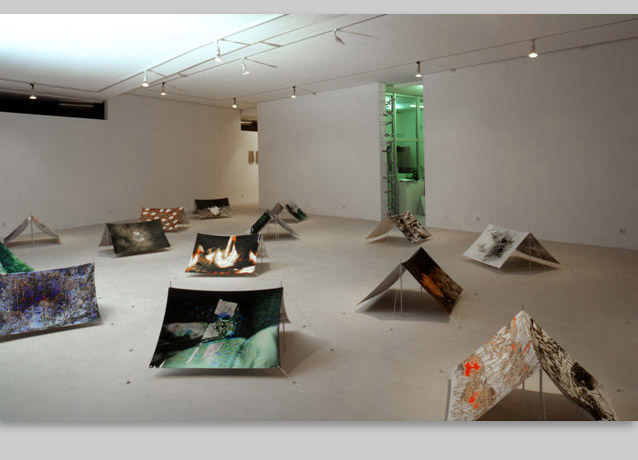
“hippoCAMPus” 1998, 15 tents; print on fabric, Galerie Manfred Rieker

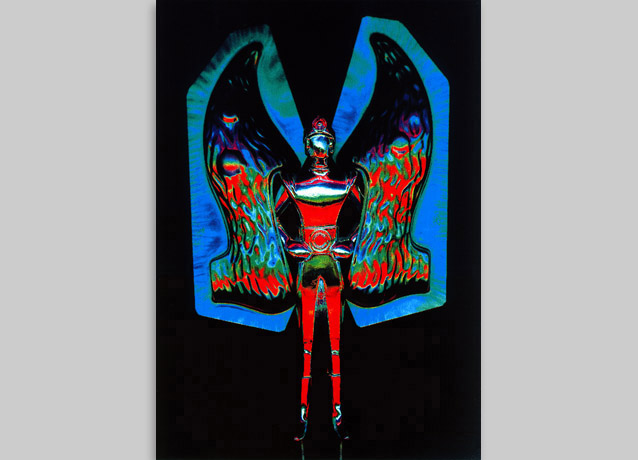
“princess” 1989, Cibachrome

bin data (still#59) 2001 - video 10:29min
------- © Georg Mühleck - VG Bild-Kunst; mail@georgmuehleck.com; www.georgmuehleck.com; info@bildkunst.de; www.bildkunst.de

“sei 2” and “sei 1” 2002, archival pigment on Arches

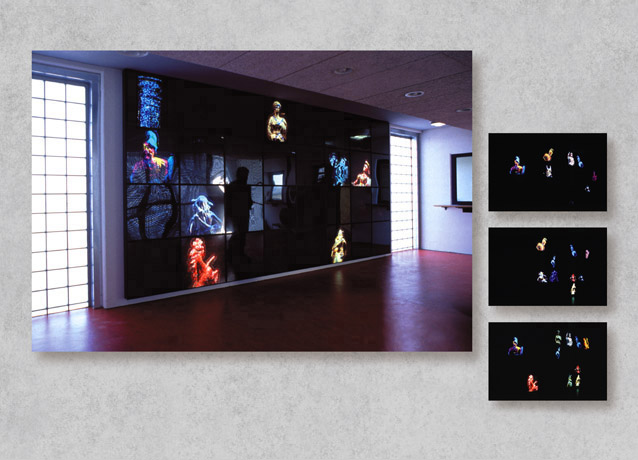
“Cellular Automata, chessmen” 1997, 32 Ilfochromes in programmed light boxes

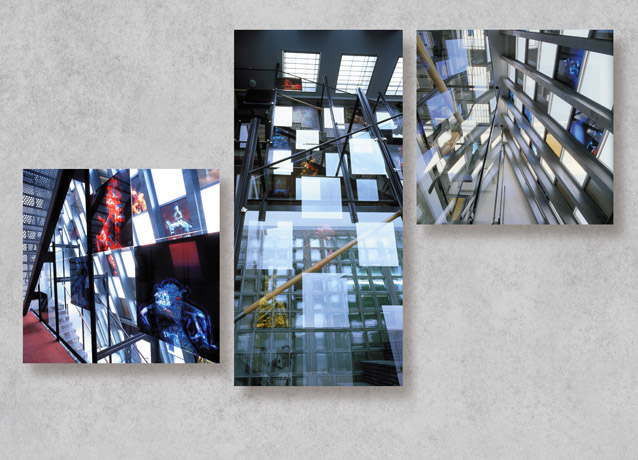
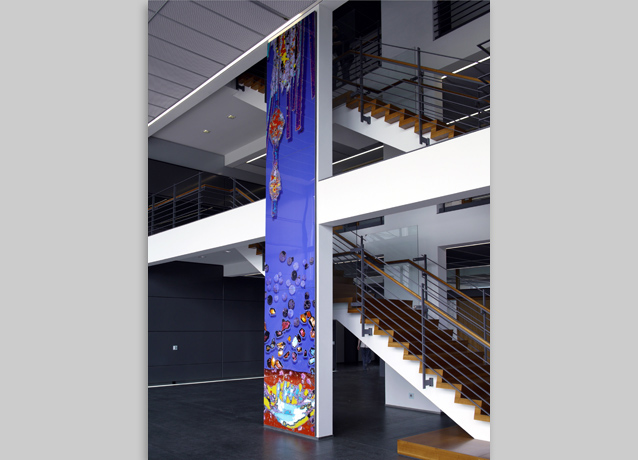
“Cellular Automata, chessmen” 1997, Ilfo/Plexi, JVA Schwäbisch Hall; architect Hansjörg Engelmann

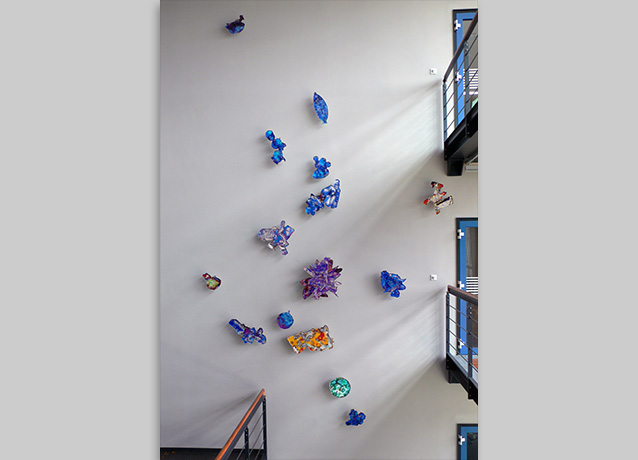
“Life rules over historic ground” 2004, The New Royal Infirmary of Edinburgh, UK

Subtle Technologies Conference + workshop with Oron Catts, University of Toronto 2007
------- © photo: probably by Barbara Rauch / Georg Mühleck; mail@georgmuehleck.com; www.georgmuehleck.com

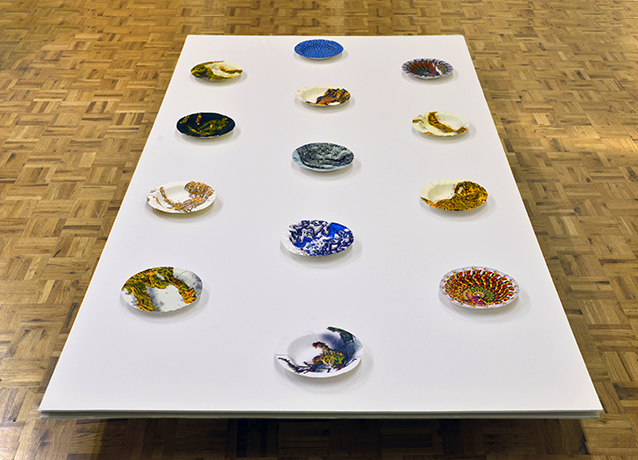
“caspecies dishes on table” 2014 Archival pigment on 100% cotton Fine Art paper 330g
The word “CASPECIES” consists of Cellular Automata and SPECIES. These species are organisms comprised of Cellular Automatas. They nourish of algorithms. In the process of creation, cell cultures go through hundreds to thousands of generations before they freeze into a large artificial micro-still. Rather than simulating real life, caspecies evoke the possibility of creatures of yet unknown origin and scale. Wanted or not, they might be the result of some genetic research, possibly escaped from petri dishes. Are these ‘mind species’ only — labyrinths of thought, or a Garden of Eden? How will we define nature in the future, with all the by-products of human interference? Is genetic manipulation part of evolution or is it its destruction? Fernando Pessoa writes in his ‘book of disquiet’: “I don’t know if we once were other beings, whose greater completeness we sense only incompletely today, being mere shadows of what they were, beings that have lost their solidity in our feeble two-dimensional imaginings of them amongst the shadows we inhabit.” (Georg Mühleck) Das Wort “CASPECIES” ist eine Wortfindung aus ‘Cellular Automata’ und SPECIES. Diese Spezies sind Organismen, die aus zellularen Automaten entstanden sind. Sie ernähren sich von Algorithmen. Während der Entstehung durchlaufen Zellkulturen hunderte oder tausende von Generationen, bevor sie zum künstlichen Mikro-Stilleben erstarren. Statt natürliches Leben zu simulieren, ruft ‘caspecies’ die Möglichkeit von Kreaturen bisher unbekannten Ursprungs und unbekannter Dimension hervor. Gewollt oder ungewollt mögen diese Kreaturen das Resultat genetischer Forschung sein, vielleicht aus der Petrischale entwichen. Sind dies nur ‘Gehirn-Spezies’ — Gedankenlabyrinthe, oder ein Garten Eden? Wie werden wir Natur, mit all den Nebeneffekten menschlicher Einmischung, in der Zukunft definieren? Ist genetische Manipulation ein Teil von Evolution, oder ist sie dessen Destruktion? Fernando Pessoa schreibt in seinem ‘Buch der Unruhe’: “Ich weiß nicht, ob es andere Wesen gegeben hat, die wir einmal waren, deren größere Vollständigkeit wir heute fühlen, da wir nur noch ihre Schatten sind — sie haben ihre Festigkeit eingebüßt, und wir können sie uns schlecht vorstellen in der Zweidimensionalität des von uns gelebten Schattens”. (Georg Mühleck)

“inked kelpie 12b” 2018, archival pigment on Hahnemühle

“voices singing across the water (caspecies 9)” 2017, Archival pigment on Hahnemühle photo rag
The word CASPECIES consists of Cellular Automata and SPECIES.These species are organisms comprised of algorithms. “caspecies in situ” is a series of work tackling the area of conflict between nature and synthetically-generated life. This research is developing a visual language, which combines the synthetical with the evolved. Algorithms and Photography form an image. Das Wort CASPECIES ist eine Wortfindung aus Cellular Automata und SPECIES. Diese Spezies sind Organismen, entstanden aus Algorithmen. “Caspecies in situ” ist eine Arbeitsreihe, die das Spannungsfeld und die Überlappung zwischen Natur und synthetisch generiertem Leben in Angriff nimmt. Diese Erforschungen entwickeln eine Bildsprache, die das Synthetische mit Gewachsenem zusammenbringt. Algorithmen und Fotografie finden zu einem Bild.

“planet on the table” 2020, archival pigment on Epson enhanced matte paper 190g, 100 x 182.5 cm + wooden support © Barbara Rauch + Georg Mühleck

“(beautiful) data dump: information table” 1991, C-prints, Umatic video

“(beautiful) data dump: part 1950” 1991, thermal video print UP 5000

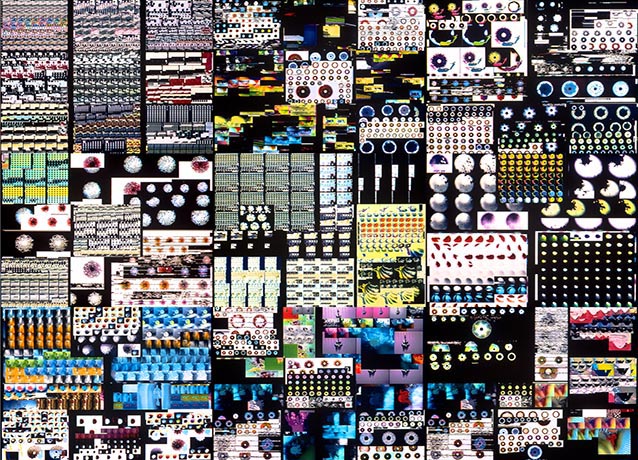
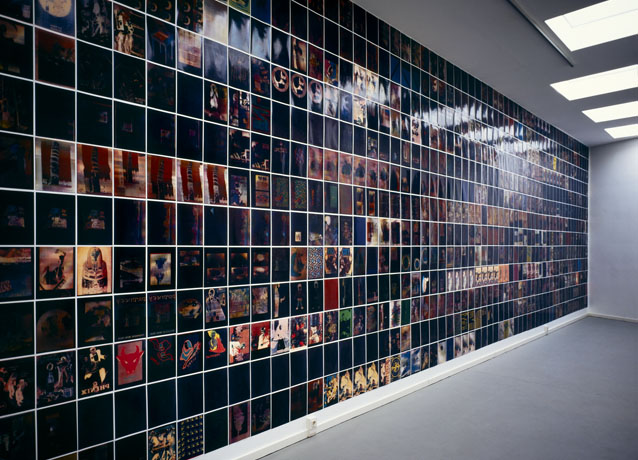
“Screen Heads” 1993, 85 Silkscreen Prints (detail of installation)

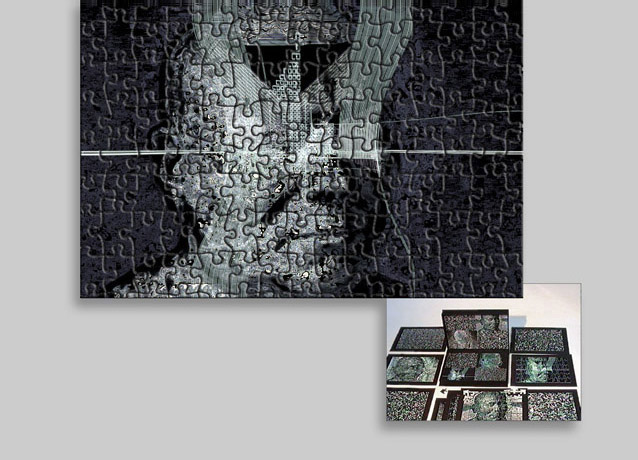
“match ID” 1993, 9 puzzles

“stranded kelpie 29” 2020, archival pigment on Hahnemühle 108 x 162 cm, edition of 3 © Georg Mühleck
The name kelpie dates back to the 17th century in Scottish folklore, serving as a water spirit. I borrowed the name for my art forms (mind creatures): a symbiosis of plant, animal and human being, kelpies evolve as a manifestation of observation, thought and phantasy. While abstract in detail, they are organic as a whole. Kelpies look strange, but somehow, they are familiar. What are they doing here, what do they want, why do they exist? ------- © Georg Mühleck - VG Bild-Kunst; mail@georgmuehleck.com; www.georgmuehleck.com; info@bildkunst.de; www.bildkunst.de

“primordium of ink 05” 2020, archival pigment on Hahnemühle Photo Rag 308g56.4 x 37.7 cm, edition of 3 © Georg Mühleck
Note on the work process The starting point for the fluid series have been photographs or scans taken from nature, their organisms serving as an ‘action space’ for cell cultures of synthetically generated life. Photography and algorithms create an image using computer models of Cellular Automata (cf. my work series Cellular Cultures-T, caspecies, and kelpies). Following the completion of these data graphs, some of them are subject to a process involving real, flowing ink. The digital work erodes under the impact of gravity on the ink. The sequence of this process is captured in photographs up to a point when the colour flow has become almost stagnant. One of the number of photographs is selected and printed with pigment ink on hand-made laid paper. What looks like painting, is in fact photography. The ‘digital fauna’ has continued to evolve. New beings, organisms, perhaps worlds have emerged. (Georg Mühleck, Juli 2021) "fluid" - Neue Wesen im Farbfluss, oder: die Einwirkung der Schwerkraft auf Tusche. Notiz zum Arbeitsprozess Ausgangspunkt der Folge fluid sind Fotos oder Scans aus der Natur, deren Organismus als ‘Aktionsraum’ für Zellkulturen synthetisch generierten Lebens dient. Fotografie und Algorithmen finden zu einem Bild durch die Nutzung von Computermodellen Zellularer Automaten (siehe meine Arbeitsreihen Cellular Cultures-T, caspecies und kelpies). Nach Fertigstellung jener Datagrafien werden einige davon einem Prozess mit real fliessender Tusche ausgesetzt. Das digitale Werk erodiert unter der Einwirkung der Schwerkraft auf die Tusche. Die Abfolge dieses Prozesses wird fotografisch festgehalten, bis ein Punkt erreicht ist, an dem der Farbfluss nahe an einen Stillstand gekommen ist. Aus den entstandenen Fotos wird eines ausgewählt und mit Pigmenttusche auf Bütten ausgedruckt. Was aussieht wie Malerei, ist in Wirklichkeit Fotografie. Die ‘digitale Fauna’ hat sich weiterentwickelt. Neue Wesen, Organismen, vielleicht Welten sind entstanden. (Georg Mühleck, Juli 2021) ------- © Georg Mühleck - VG Bild-Kunst; mail@georgmuehleck.com; www.georgmuehleck.com; info@bildkunst.de; www.bildkunst.de

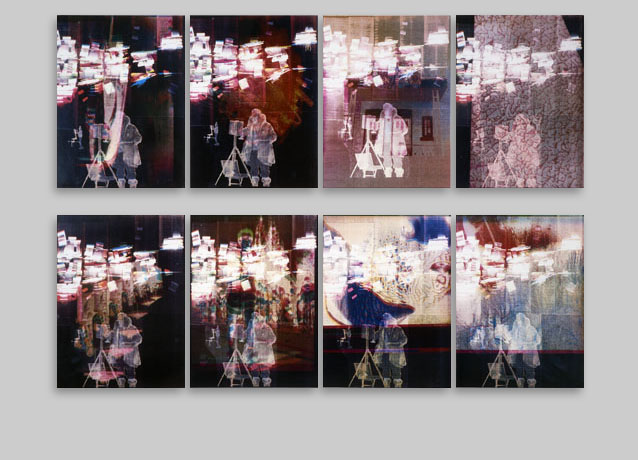
“The painting professor: pirate art process #...” (PP360) 1988, digital-thermal copigraphy CX-5000

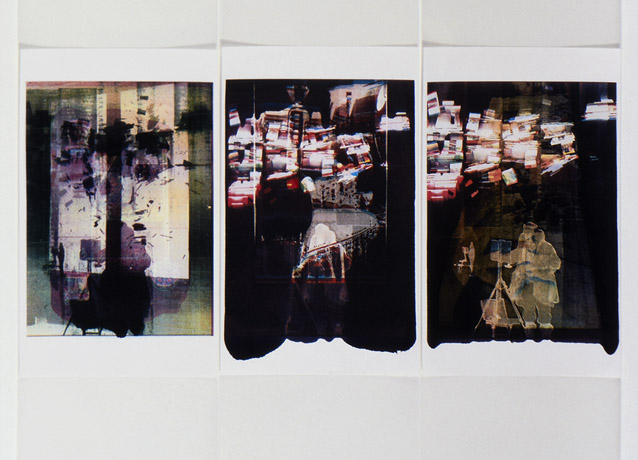
“The painting professor: pirate art process PP370” 1988, laminated Copigraphies CX-5000

"fluid 14(k)" 2021, archival pigment on Hahnemühle 61x79cm, edition of 5 © Georg Mühleck
Note on the work process: The starting point for the fluid series have been photographs or scans taken from nature, their organisms serving as an ‘action space’ for cell cultures of synthetically generated life. Photography and algorithms create an image using computer models of Cellular Automata (cf. my work series Cellular Cultures-T, caspecies, and kelpies). Following the completion of these data graphs, some of them are subject to a process involving real, flowing ink. The digital work erodes under the impact of gravity on the ink. The sequence of this process is captured in photographs up to a point when the colour flow has become almost stagnant. One of the number of photographs is selected and printed with pigment ink on hand-made laid paper. What looks like painting, is in fact photography. The ‘digital fauna’ has continued to evolve. New beings, organisms, perhaps worlds have emerged. (Georg Mühleck, Juli 2021) ----------------------------------- "fluid" - Neue Wesen im Farbfluss, oder: die Einwirkung der Schwerkraft auf Tusche. Notiz zum Arbeitsprozess: Ausgangspunkt der Folge fluid sind Fotos oder Scans aus der Natur, deren Organismus als ‘Aktionsraum’ für Zellkulturen synthetisch generierten Lebens dient. Fotografie und Algorithmen finden zu einem Bild durch die Nutzung von Computermodellen Zellularer Automaten (siehe meine Arbeitsreihen Cellular Cultures-T, caspecies und kelpies). Nach Fertigstellung jener Datagrafien werden einige davon einem Prozess mit real fliessender Tusche ausgesetzt. Das digitale Werk erodiert unter der Einwirkung der Schwerkraft auf die Tusche. Die Abfolge dieses Prozesses wird fotografisch festgehalten, bis ein Punkt erreicht ist, an dem der Farbfluss nahe an einen Stillstand gekommen ist. Aus den entstandenen Fotos wird eines ausgewählt und mit Pigmenttusche auf Bütten ausgedruckt. Was aussieht wie Malerei, ist in Wirklichkeit Fotografie. Die ‘digitale Fauna’ hat sich weiterentwickelt. Neue Wesen, Organismen, vielleicht Welten sind entstanden. (Georg Mühleck, Juli 2021) ------- © Georg Mühleck - VG Bild-Kunst; mail@georgmuehleck.com; www.georgmuehleck.com; info@bildkunst.de; www.bildkunst.de

“staged caspecies 11” (2 groups of seven) 2015, archival pigment on Canson

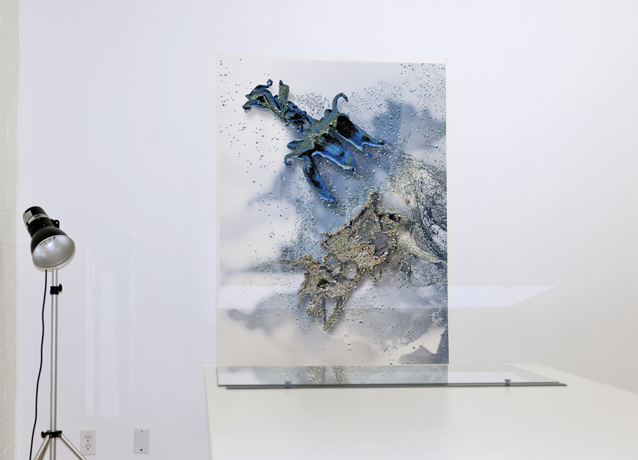
“swaying differentiated dish 2” 2011, archival pigment, Plexiglas

“music feedback” 1994, Ciba/Plexi, Musikschule Neckarsulm, architects: Bechler-Krummlauf

"The Pirate Art Process" digital thermal prints CX 5000, Galerie Rahmel, Köln 1990

“Untitled Cloridorme No 4” 1986, Copigraphy RX 6500

horizontal_transformation_of_ 1982, Oil pastel on Arches

“Copies of nothing in Oct.1982 (Opera grey)” Copigraphy RX 6500

“Copy of nothing in October 1982 or: the air of the gallery #1-13” Copigraphy RX 6500

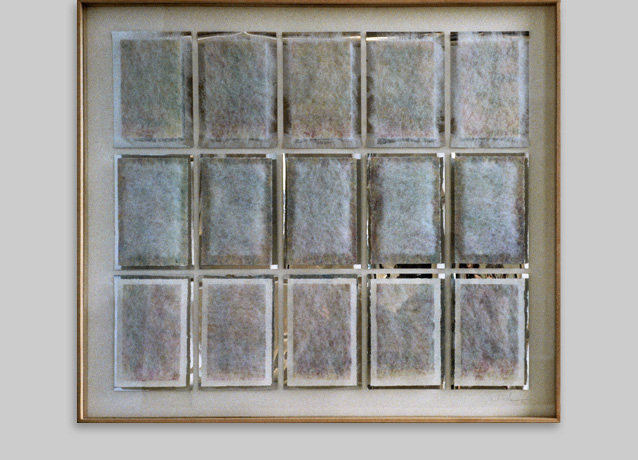
“Fünfzehn Weichspiegel-Sandwiches” 1981, Oil Pastel on tissue, polyester wadding, aluminum foil

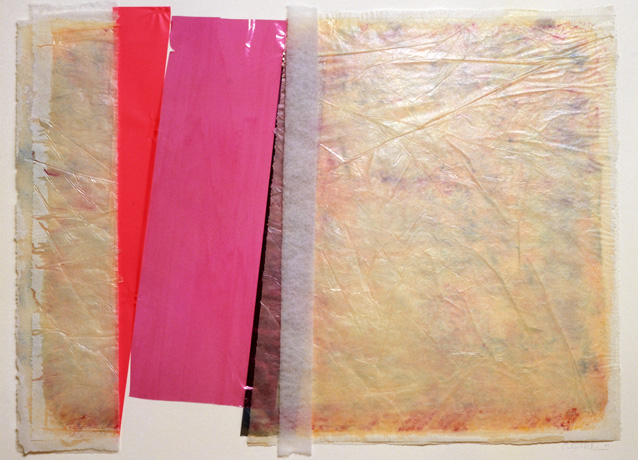
“Signal” 1981, oil pastel on tissue, plastic film, polyester wadding, aluminum foil

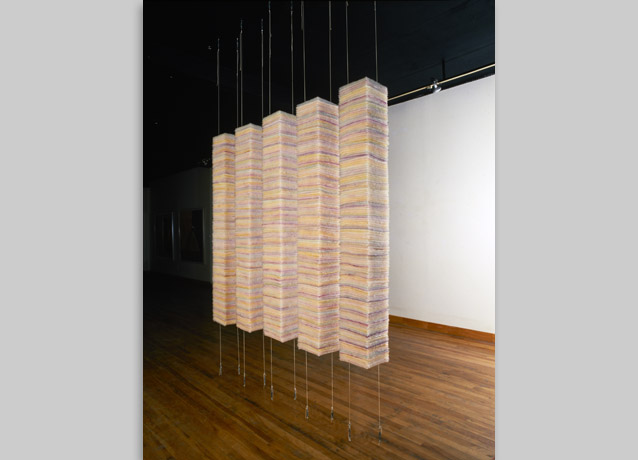
“Five vertical sandwiches” 1981, oil pastel, polyester wadding, Galerie Motivation V Montréal

ASSEMBLING CA-ELEMENTS (FAILED TEST)_2010

"Peripheral alive platter#7 CA30" 2010, archival pigment on Canson 310g, 108 x 73,6 cm, edition of 3, © Georg Mühleck

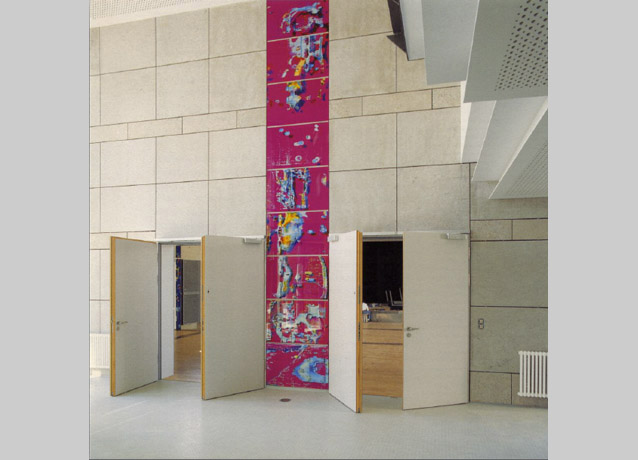
“Enemat” 2007, Ilfo/Plexi/stainless steel, Fraunhofer Gesellschaft; architects K.Lehmann, M.Schneider

“Polymat” 2006, Ilfochrome/Plexiglas, Fraunhofer Gesellschaft; architects K.Lehmann, M.Schneider

“Memory-Schiff” 2000, Ilfochrome/Plexiglass, stainless steel, cemetery Untergruppenbach

“armed arm” 1992/93, Ilfochrome 120 x 143 cm, edition of 3 © Georg Mühleck

“Untitled (light #2)” 1987, 106.3 x 69.7 cm, Copigraphy RX 6500 on 100% cotton paper 1/1 © Georg Mühleck
reflectors series

“copyman” 1989, Cibachrome 127 x 198 cm

“mind bunker #11” 2000, Translucent C-Print in tray

“mind bunker #1” 1999, Lysonic on Rough Fine Art paper

“ossified on devil’s footprint (kelpie 10)” 2019, archival pigment on Hahnemühle 162 x 108 cm, edition of 3 © Georg Mühleck
The name kelpie dates back to the 17th century in Scottish folklore, serving as a water spirit. I borrowed the name for my art forms (mind creatures): a symbiosis of plant, animal and human being, kelpies evolve as a manifestation of observation, thought and phantasy. While abstract in detail, they are organic as a whole. Kelpies look strange, but somehow, they are familiar. What are they doing here, what do they want, why do they exist? ------- © Georg Mühleck - VG Bild-Kunst; mail@georgmuehleck.com; www.georgmuehleck.com; info@bildkunst.de; www.bildkunst.de

NEW PUBLICATION / NEUERSCHEINUNG
Georg Mühleck "Cultivated Algorithms"
Nature and artificial creatures / Natur und künstliche Wesen; German / English
Hardcover, 280 Pages, 220 images.
Published in Feb. 2026
******
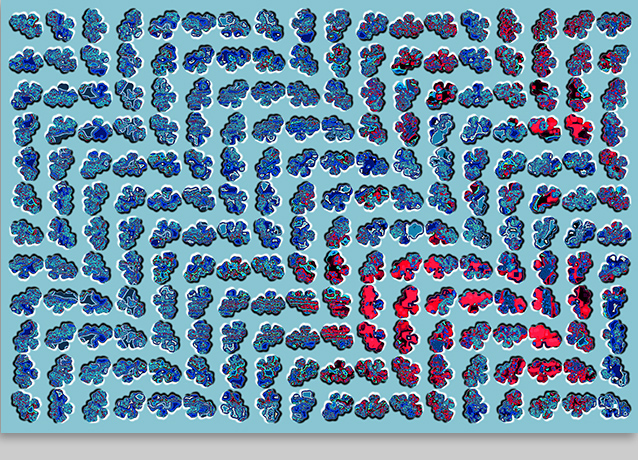
This archive presents works of art spanning over four decades. During the 1980s analogous works were created. From the beginning of the 90s, realizations follow that focus on processing and themes in the digital realm.
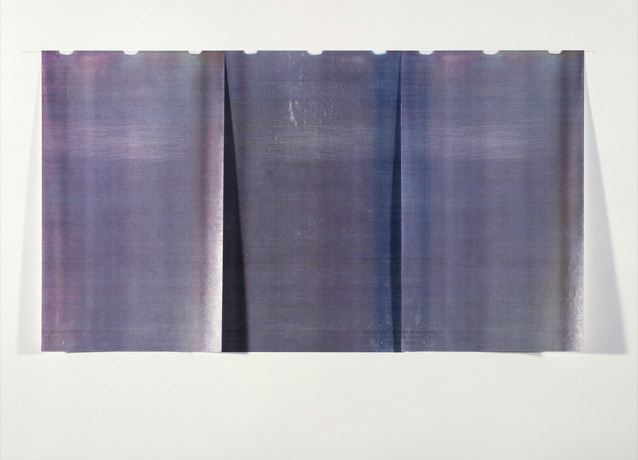
Dieses Archiv präsentiert Kunstwerke aus über vier Jahrzehnten. In den 1980er Jahren sind analoge Werke entstanden. Ab Anfang der 90er Jahre folgen Realisierungen, die sich auf Verarbeitung und Themen im digitalen Bereich konzentrieren.